It used to be, back in oh, say 1998, that it wasn’t hard to get noticed as a webcomic. Mostly because there just wasn’t the same kind of competition that there is today, so anything that was half ways decent could get a readership just by being persistent, it didn’t actually have to be good per se. Today, that’s changed. With so many hundreds of thousands of webcomics to choose from and only 24 hours in a day, readers are getting pickier and pickier about what they stick around for. If you want to get noticed these days, you have to stand out. The trick of course is ‘how?’.
Author Archive
Search strings, otherwise known as “how people found your site on google” are awesome. You can get all sorts of interesting things pop up. With this site I get a lot of good and weird search strings.
I thought this might be fun, since I get a lot of interesting search strings about webcomics, often formatted as questions, to take some of the top ones and do a sort of Q&A every month for the previous month’s search strings.
So here were the best search string questions of Jan 2011.
Recently, I’ve been participating in a discussion over on Drunkduck with a sprite comic artist who wanted feedback specifically from people who hate sprite comics. I obliged him. Although in the course of the conversation it became clear to me that there needs to be more awareness raised for alternatives to ripping sprites for those who can’t draw. Legal alternatives that will help people who don’t feel like learning to draw (or mistakenly believe they can’t), create instant comics despite their artistic handy cap. So I’ve provided some links here in this article to software that helps you, the zero art skills dude make comics as a follow up to my first post about making webcomics if you can’t draw.
It is often (although not always) a dream of a webcomic creator to make anything from a little money to support the webcomic, to an entire living off their webcomic creation. Generally many strategies have to be employed, but usually the first thing one thinks of is creating products based on or related to a comic, also commonly referred to as ‘merchandising’.
Well it’s November, and coming along with snow, ice, and people who can’t drive on winter roads, Christmas and the consumer money-spending frenzy that follows is just around the corner. People are out there hungry to spend money, and in the spirit of such, there are a lot of webcomic creators who’s wallets are very hungry to capture some of that action.
In the spirit of the season, this month, I’ll be talking about various ways and tips about making money, monetizing, and merchandising your webcomic, and finally what it takes to make a living at your webcomicing dreams. This first article is about what you need to begin making money on your webcomic.
So, you want to start a webcomic, but there’s a problem. You can’t draw. Well, that fact doesn’t have to be the end of your webcomic dreams, but it does mean you may have to go a slightly different route than those who already can.
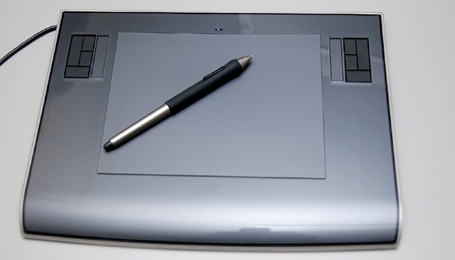
While it might seem like you need state of the art equipment in order to make a webcomic, its actually pretty far from the truth. Webcomic creation can be highly simple or complex depending on your level of comfort with technology and budget. Here’s a rundown on some of the most common tools to create webcomics.
What is a webcomic without readers? Let’s face it, most of us creator types aren’t putting our hearts and souls into a comic creation that we don’t want any one to read. We put it on the web and out into the world to garner attention and interest, entertaining and communicating with the masses. Without some masses to communicate to, it seems pretty futile. For that reason, its no surprise that every webcomic author is eternally looking to build, rebuild, or expand a current readership. But how do you accomplish this task?
This article is primarily for the artist who wants to write, but for aspiring comic writers it might be valuable as well.
It has often been argued in webcomic circles, which is more important; writing or art? If a webcomic was a house, the art is really the curb appeal and exterior of the house. Its the decorative touches and facade. It gives the house beauty and character. But the foundation, the heart and soul of a comic is in its story, and thus in the writing. A comic with good writing can gain a following with so-so art, but a beautiful comic with a crappy, incoherent story won’t really limp anywhere for long. Both ultimately are important, but the writing, in long or short format, is what ultimately keeps readers coming back week after week.
One of the most challenging tasks that lay ahead for both aspiring and established webcomics is getting the word out to your audience (or potential audience) that you exist. In the past, link exchanges, top links, banner exchanges and webrings were enough to bring a steady flow of visitors. These days however, the dynamics of the web have changed, and creators are forced to look into more commercial methods of marketing, namely advertising. But advertising can be expensive pursuit and what if you want to MAKE money with ads? Read on, and find out how to minimize your advertising costs, while maximizing the value of your own site’s ads.